Saturday, May 31, 2025

Night Drive

It’s after a while that I am leaving this late from the office. There is no one at home; Divya and mom went to home back in Kerala for a couple of weeks. So even if I reach early, there is nothing much to do there. So, better than spending time in front of Jio Hotstar to watch the remaining episodes of Tracker, I thought of staying late at the office. Finally, close to midnight, I decided to go. Hardly there were many people in the parking lot. A couple of cab guys were sitting in their cars; headsets plugged in — might be watching YouTube Shorts. One of the side effects of liberalizing data traffic when Jio was launched was YouTube, Instagram, etc., becoming accessible to everyone. No more buffering. The invention of infinite scroll only made the addiction worse. Well, I am also a victim here!!!

Leaving them behind, my scooter left the office main gate and ventured onto the public road. Hardly any vehicles were there — just a couple of cabs stopped on the sides and water tankers. Water tankers are prominent on most inner roads of Bangalore; many areas of the city depend on the water arriving in these vehicles.

This time, I decided to focus fully on the road and bring my mind to the details around. The mind is like a horse without reins — it goes in whatever direction it wants. This time, I deliberately focused on the road. On the sides, there were a couple of Swiggy and Zomato drivers waiting for their next call. Opposite, a couple of cars came and went, many using high beams. This is one of the problems in driving at night. People, especially the ones driving private vehicles, always use high beams at night regardless of whether someone is coming from the opposite direction. Nowadays, even stock high-beam lights are very powerful. In many cases, they replace them with brighter bulbs and make it very hard for people coming from the opposite direction. Even after they pass, your eyes get blinded for a few seconds. Previously, people driving yellow-board and commercial vehicles were better — they used to dim the lights. Nowadays, even yellow-board cabs are no better.

These roads have a lot of stray dogs. More than anything, these stray dogs are a problem while riding bikes at night. One can't say when they will suddenly jump in front of you. This time, one dog was rolling left and right on the road, probably to scratch an itch on its back. Light from the headlight brightened its eyes.

Soon, I entered a busier road and increased the speed slightly to match the pace of other vehicles. While traveling on roads, it’s better not to go too fast or too slow; as Buddha said, the middle way is better. Going too slow or too fast creates problems for fellow vehicles. Slightly ahead, one biker was drawing sine waves on one side of the road!!! I soon overtook him — it looked like he had put his phone on speaker and was holding it in one hand, controlling the bike with the other.

I was already going slow, and in front of me, there was a bike going much slower. I’ve often noticed that unmarried couples go slower compared to married ones. Probably they are more romantic and have more things to say to each other? Both groups go much slower compared to single guys (or when both rider and pillion are guys)!! This is my observation; it’s possible that your observation is slightly different. Let me know.

One problem while riding bikes on Indian roads with the visor open is the amount of dust. There is so much dust in the air that it kills the enthusiasm. I often prefer to ride after a slight rain, as the dust will settle for a while and Bangalore roads are not submerged in water. Soon, I reached home, and the date on the calendar had changed.

Sajeev

Friday, May 2, 2025

Bangalore - Bull temple and Bugle Rock


L
ocated in Basavanagudi area of Bangalore, The Bull Temple (known in Kannada as 'Dodda Basavana Gudi'), is one of the oldest temples in Bangalore built by 16th century ruler and founder of Bangalore - Kempe Gowda I. Nandi idol in this temple is over 15ft tall and carved from a massive monolithic granite rock.

Bugle rock park is located next to temple and spans over 16 acres of land. Park has a number of walkways, an amphitheater, options for adults to do exercise and kids to play. What makes this park special is geology. The rock formations with in this park is estimated to be more than 3000mn years old. You may still be wondering why it was called bugle rock.  Well, during the reign of Kempe Gowda, watchmen were placed here. Given the height of this place, it gives a better view of the surrounding areas. Watchmen would blow a bugle to signal the closing of city gates at dusk and also to inform people in case of any dangers. 

In those days Bangalore city had four main gates, located at, 
1. Yalahanka (Northern Gate)
2. Halasuru/Ulsoor (Eastern Gate)
3. Kengeri (Western Gate)
4. Kanakpura (Southern Gate)

In addition to the gates there were also four watch towers located at,
1. Lalbagh rock
2. kempambudhi Tank
3. Mekri circle
4. Ulsoor lake

Bull Temple and Bugle Rock had been on my bucket list for a while, but I never quite made it there. This time, on a Saturday afternoon, we finally decided to go. Since the roads tend to get congested around that time, we took the scooter—it’s easier to navigate traffic and needs less space. So, it was me, Divya, and Niha. I can’t exactly say 'three men in a boat', but it felt something like that.

It was also Niha’s first proper ride. Before this, we had only taken her around 200 meters on scooter. She sat sandwiched between us, and our little trip began. First stop—Brahmin’s Coffee Bar in Basavanagudi. This restaurant is over 60 years old and very popular. They kept the menu simple  - coffee, idli, vada, kesari bath, and khara bath. We skipped idli (a regular breakfast item at home and, in Divya’s words, her idly is the softest ever) and got the vada, kesari bath, and khara bath. Divya does put effort into making soft idlis—something I tease her about, saying she perfected the recipe after years of experimenting on me.


The vada and kesari bath were good. The khara bath tasted very different from what I’ve usually had, but it was still tasty. Divya didn’t try it because of the color combination! Since Niha hasn’t yet reached the stage of saying a firm yes or no, I managed to push a couple of bits of Khara bath to here mouth as well!!!

From there, Bull Temple wasn’t far. By the time we left, the sky had already turned to darker shade of grey. Still, we went ahead and reached the temple. A lot of bikes were parked in the front, but the temple itself wasn’t too crowded. It’s not just the Bull Temple—there are two to four other small temples around the same area.

Chappal stand charges were 5 rupees/pair, and they accept UPI as well. I just wish public toilets worked the same way. Getting exact 5 rupee coin or 10 rupee note is difficult.

One of the entrances to Bugle Rock Park is quite close to the Bull Temple. It was nearly 8 PM—closing time—so we had very little time left. We took a slow walk inside, sat for a bit at the amphitheater, walked to the other gate, and circled back. It’s a lovely place to spend some time. Need to come back here again, but in day time. 

Sajeev

Tuesday, April 15, 2025

The little things in road construction that makes a big difference

Roads are lifelines of a country. They connect people to everything they need—schools, offices, hospitals, markets, parks, railway stations, airports, and more. If a region doesn’t have a good road network—both in terms of quantity and quality—its development will be stunted. Across India, many small towns grown around major road junctions or near bus stands. I won’t go into the importance of roads here, as that’s something we all understand. 

Instead, I want to highlight how small, often ignored details in road construction can create big problems.

Let’s start with filling the potholes. Potholes are a big problem which we all understand well and suffer the consequences. Problem is the difficulties don't disappear even when contractors do the patchwork. Modern technology allows pot holes to be filled precisely and provide a smooth ride on top of it. But no, here people always leave leaves a bump at repaired spot; and every vehicle that drives over it ends up jumping slightly. Pot holes are numerous in road; came as a result of faulty fill up of channels dug for water and OFC networks, monsoon rains and inadequate sewage system and storm water drains etc. First these holes and then bump created by filling it up puts unnecessary stress on the spine, especially for daily commuters. Another issues is the cap of manholes placed in interior roads, this often ends up several inches higher compared to road surface. 

Flyovers are another area where issues crop up. In many cities, flyovers are being built at major junctions. A common problem is the gap between two spans—there’s usually a metal bar placed at the end of each span. While this design is necessary for structural reasons, the dip/angles at these joints causes vehicles to bounce when crossing. At higher speeds, these jumps can feel quite uncomfortable and even dangerous.

Then there speed bumps, especially the yellow-and-black colored ones found in apartment, office complexes, parking lots etc. These are often too sharp. Unless you slow down to a crawl, passengers—especially those sitting in the back—feel a sudden jolt when the vehicles goes over them.

These are just three of numerous other problems. All these show how small design decisions during construction can have a big impact on everyday travel. These may seem like minor issues, but they affect comfort, safety, and even health over time. It’s time we start paying attention to the little things. Because when it comes to road construction, the small details also matters. Road safety and comfort aren't just about highways and traffic rules; it's also about these tiny details that decides how smooth your ride will be.

Sajeev

Sunday, March 9, 2025

Tourist safety concerns in India after Hampi incident

The primary function of a government is to protect its citizens, a duty in which it must not fail. This responsibility extends not only to citizens but also to foreigners visiting India as tourists, business travelers, or for other reasons. Ensuring their safety is not just the duty of the government or the police; civil society also plays a crucial role. If we fail to protect both citizens and visitors—allowing them to be robbed, assaulted, or even killed in well-known tourist areas—then society must engage in deep introspection. Where are we headed?  

In today's world, bad news spreads rapidly, and such incidents severely damage India's global reputation as a safe destination for tourism and business. Potential visitors may reconsider their plans, as no one wants to feel constantly afraid and cautious during their vacation. Unfortunately, this is not the first time such an incident has occurred, and it is unlikely to be the last.  

India aims to project an image of being the world's oldest civilization and a "Vishwaguru" (global teacher), but such crimes have no place in a truly civilized nation. Consider the recent shocking incident in Hampi. For those unfamiliar, Hampi was the capital of one of South India’s most successful empires—Vijayanagara—which ruled for over three centuries. It is also associated with Kishkinda, the legendary land of Bali, Hanuman, and Sugriva. Hanuman and Sugriva once fought against Ravana for the injustice he committed against Sita. And now, in the same place, horrific crimes are being committed against women.  

According to news reports, on the night of March 6th, around 11 PM, a homestay operator (a 29-year-old woman), an Israeli tourist (a 27-year-old woman), a man from the US, and two Indian men were sitting near the Tungabhadra canal close to Sanapur Lake. Reports state that the victims had met at the homestay itself. Initially, the attackers approached them asking for petrol money. The tourists gave them ₹20, but they demanded ₹100. When their request was denied, the situation escalated. Two of the accused allegedly gang-raped the homestay operator, while another allegedly assaulted the Israeli tourist. They also pushed the three male tourists into the canal—two managed to swim back, but the third drowned. The attackers stole the homestay operator’s bag, cash, and mobile phones. So far, the police have arrested two suspects, while a third remains at large. Shockingly, the arrested individuals are only 21 and 22 years old.  

Incidents like this will have a severe impact on India's international reputation. If women are not safe in a Kolkata medical college, on the streets of Delhi, or even in a famous tourist destination like Hampi, where can they feel secure? Women travelers, especially those planning to travel alone or in small groups, may hesitate before choosing India. Who would want their dream trip to turn into a nightmare?  

This issue cannot be blamed solely on the administration or the police. Society as a whole is responsible. The idea of 'Atithi Devo Bhava' (guest is God) should not just be a slogan used in advertisements—it must be ingrained in our mindset and actions. When someone visits our city or village, it is also our responsibility to ensure they have a safe and pleasant experience. Additionally, society must reflect on how individuals as young as 21 or 22 are committing such gruesome crimes. Addressing this issue requires collective effort, education, and a shift in societal attitudes.

Don't exploit tourists. Don't overcharge them, force them to buy something, or chase them to choose you as a guide. Don’t stare at them or make unwanted comments. Treat them with respect, and they will return and share positive experiences.

International tourists

Dubai welcomes around 16 million international visitors each year, and a similar number visited Singapore in 2024. According to reports, Turkey had 55.2 million visitors in 2023, Greece saw 32.7 million, and Egypt received 13 million. Where does India stand in terms of international tourists? Even within Asia, it lags behind Thailand, Malaysia, and Vietnam.

India has everything geography can offer—glaciers, deserts, rainforests, plains, oceans, islands, and rivers. It has a history spanning multiple millennia and monuments that are truly marvelous. Yet, we are far from realizing our true potential in attracting international tourists. Let’s not shoot ourselves in the foot.

Sajeev. 

References

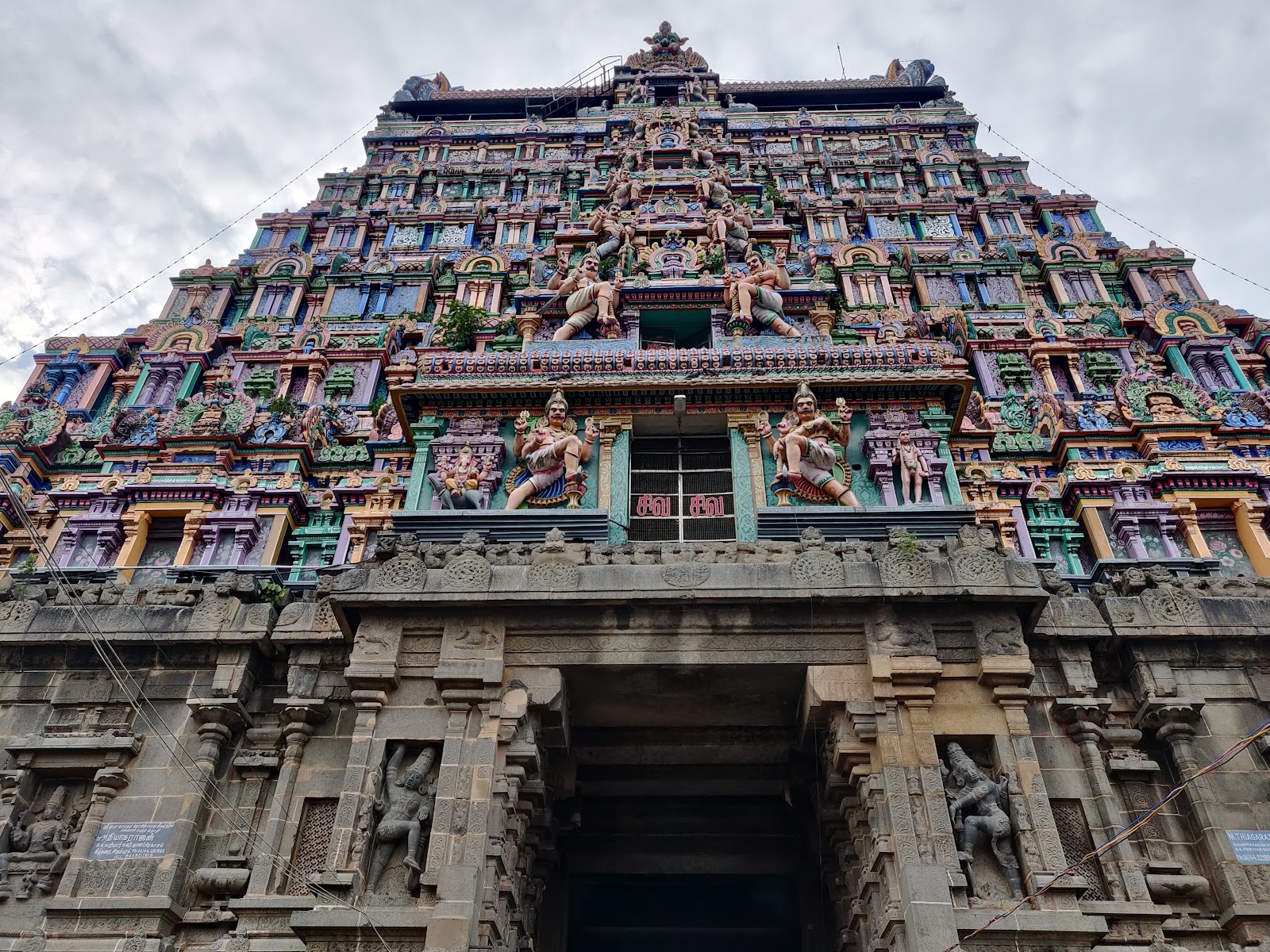
Though the land of Chola's - Chidambaram Nataraja Temple (Thillai Nataraja Temple)

After leaving Airavateshwara Temple, it was raining for a while. By the time we reached the Kollidam old river bridge, the rain had almost stopped. The atmosphere became calm again. We took a pit stop after crossing the barrage cum bridge to explore the area. Kollidam, a distributary of the Kaveri, forms a river island here. Chidambaram temple is just 45 km from this point. We resumed our journey and reached the temple city within an hour.

Kollidam River


Chidambaram Nataraja Temple (Thillai Nataraja Temple)

Spread over 40 acres, this temple is dedicated to Nataraja (lord of dance) form of Shiva. Shiva's consort Parvati as Shivakama/Shivagama Sundari is also here. It is believed that, this temple also has references in sangam literature; but in those days city name was not Chidambaram. Earliest mention of Chidambaram was probably in 7th and 8th century texts. The present temple was built in 10th century when Chidambaram was the capital of early Cholas. It is possible that, Cholas converted/rebuilt a earlier temple here with stone in 10th century. Even the present temple is more than a millennium old. This temple also has shrines for devi, Surya, Ganesha, Murugan, Vishnu etc. and represents Shaktism, Vaishnavism and other Hindu traditions. 

The word Chidambaram probably came from the combination chithu + ambaram. Chithu means manasu/mind, consciousness and ambaram means sky/atmosphere. 


Like other temples in the region - Srirangam, Madurai etc. -  Chidambaram was also raided by Delhi Sultanate. However, the structure was repaired and restored with the rise of Vijayanagar. City and temple also suffered during the fight between British and French colonial forces in India. 

By the way this temple also has a thousand pillared mandapa (Raja sabha). Interestingly the sanctum of the temple has a resemblance to Kerala temple styles. The Shiva sanctum here is very unusual as it don't have a linga; instead it has Chit Sabha with an image of Nataraja. After all Chidambaram represents Vayu tatva and formless representation of Shiva. Renowned for art and dance, temple wall also displays 108 karanas from Natya shastra of Bharata Muni. 

Chidambaram is one of the five temples where Shiva is in Nataraja form preformed Thandava dance. All five temples are in Tamil Nadu and they are,

1, Ratna Sabha
Located in Vada Aaranyeswarar Temple in Thiruvalangadu. It is believed that, Nataraja performed Kali Tandavam here.
2, Kanaka Sabha
This is located in Chidambaram temple and belief is that, Nataraja performed Ananda Tandavam here.
3, Rajata Sabha
This sabha is in the famous Meenakshi Amman Temple of Madurai. Here Shiva is worshipped as Sundareshvarara and Parvati as Meenakshi. Tandavam type is Sandhya Tandavam.
4, Tamra Sabha
Located in Chepparai Temple of Tirunelveli. Here the form of tandavam is Muni Tandava.
5, Chitra Sabha
This sabha/hall is located at temple Kutralanathar in Courtallam. Tandava form here is Tripura Tandava

If tandava is performed with joy, then it's called Ananda Tandava. If the mood is violent then dance is called Rudra Tandava. Some other types of tandava are - Tripura Tandava, Sandhya Tandava, Samhara Tandava, Kali Tandava, Uma Tandava, Shiva Tandava, Krishna Tandava and Gauri Tandava.

Chidambaram is also considered as one of the five Shiva temple which represents five primary elements. 


List of temples under that category are,

1, Ekambareshwar/Ekambaranathar temple, Kanchipuram 
This temple covers 25 acres represents the earth aspect. Here Shiva is represented in lingam known as Prithvi lingam. This temple also have thousand pillared hall built during Vijayanagar time. 
2, Jambukeshwarar temple, Thiruvanaikaval (near Tiruchirappalli)
Here the sanctum has an underground water stream. Belief is that Parvathi, in the form of Akilandeswari built shivalingam out of water. This temple represents the water aspect and the lingam is known as  Appu lingam.
3, Arunachaleshwara temple, Tiruvannamalai 
This temple represents fire aspect and the lingam is known as Agni lingam. This temple also have thousand pillared hall built during Vijayanagar time. 
4, Srikalahasti, Srikalahasti.
This temple is not in Tamil Nadu but in Andra Pradesh and represents Vayu aspect. 
5, Chidamabram
Represents the space.


Once you are in temple don't forget to see below halls,
Chitra Sabhai (the sanctum), 
Por Sabhai (hall preceding the sanctum), 
Nirutha Sabhai (the chariot shaped hall), 
Deva Sabhai (the hall where all the festival deities are housed) and
Raja Sabhai - the thousand pillared hall) 


Coming to Nataraja form, what Nataraja idol represents?
Demon under feet signifies that ignorance is under the feet.
Fire in hand- power of destruction- represents the destroyer of evil
Abhaya mudra represents savior of all life forms
The arc of fire called prabhavati signifies the cosmos and perpetual motion.
Drum in hand signifies the origin of life forms.
Lotus pedestal signifies Om believed to be the sound of universe.
Right, left and third eye signifies sun, moon and fire/knowledge respectively.
Right earring (makara kundalam) and left earring (sthri kundalam) signifies the union of man and woman (right is man, left is woman).
Crescent moon in hair means benevolence and beauty.
Flowing of river Ganges through hairrepresents eternity of life.
Dreading of hair and drape means the force of dance

This area of Tamil Nadu is different from other areas of the state. There are a lot of water bodies around. In fact, Pichavaram mangrove area is just 13km away from temple. This time mangroves were not in the plan, however next time it will definitely be. After roaming around the temple for some time, we finally came out and continued towards our next destination.

Sajeev

References

1, https://en.wikipedia.org/wiki/Pancha_Bhuta_Sthalam
2, https://en.wikipedia.org/wiki/Nataraja_Temple,_Chidambaram
3, https://en.wikipedia.org/wiki/Pancha_Sabhai